
From the Tower to the Touchline: Leadership in Action
At first glance, the ideas of coaching a group of kids on a soccer field doesn’t exactly seem like it would be anything like leading a team in the military. Especially when you take working in high-pressure environments like I do in air traffic control, as my “9 to 5”. One is full of energy, laughter, and short attention spans, while the other demands a very specific blend of precision, discipline, and focus.
The more time I’ve spent doing both, however, the more it’s helped me realize that the core principles of leadership aren’t actually changing, they just present themselves…differently.
Leadership Begins with Clarity
It almost goes without saying that in the military and in air traffic control…clarity is everything. Instructions need to be simple, direct, and understood immediately. There’s no room for confusion or error when the stakes are high.
Coaching kids holistically isn’t any different. Of course, we aren’t managing planes in the sky, but we’ve accepted a role as a coach that has a direct impact on kids playing careers and their development. If you over-explain a drill or give too many instructions, you lose them instantly and gain nothing but blank stares and cloud counters in return. What tends to work best is the same basic set of principles:
Keep everything simple
Be direct
Show, don’t just tell
Whether it’s directing aircraft or explaining a passing drill, clarity builds confidence.
You Can’t Control Everything (And That’s Okay)
One of the biggest lessons from both worlds is understanding that you simply can’t control every outcome. This is hard for a lot of people, myself included, and it’s one lesson that’s in constant motion. It has that similar feeling of being the passenger in a car when you’re used to your own driving, and it’s difficult to let go and relinquish that control.
Even in the world of ATC, you can guide, direct, and anticipate, but things still change. Weather shifts. Pilots make unexpected decisions. Situations evolve quickly.
On the soccer field, it’s a bit more obvious. Kids will forget instructions, get distracted, or do something completely unexpected.
Instead of fighting against that, good leadership means:
Finding ways to adapt in the moment
Letting go of the ideas of perfection
That “perfect” lesson plan you spent all week drawing up, may not go exactly as you hoped, and… That. Is. Okay.
Focusing on guiding instead of controlling
Because whether it’s aircraft or coaching, flexibility beats rigidity every time. Every team is different, and so is every kid.
Confidence Is Built, Not Demanded
In high-pressure environments, confidence isn’t something you can feign for very long. It’s built through repetition, trust, experience, and time.
The same logic applies to when we coach. You can’t just tell a player to “be confident.” Confidence and trust takes time to develop between players and their coaches. The length of time is unique to every coach as well as every kid. It can be days, weeks, or years in the making. It will never be a “one size fits all”. But what we can control, is being consistent in creating an environment where they feel safe to try, fail, and try again.
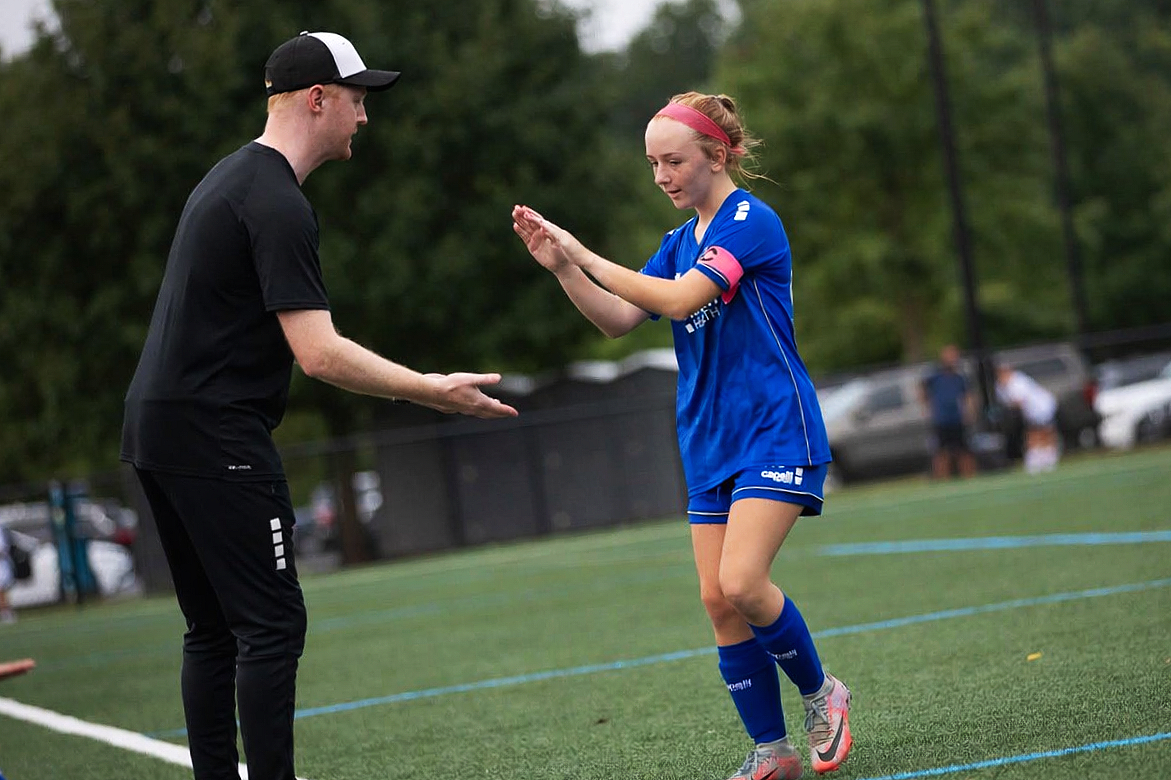
That means:
Encouraging every effort, not just the results
Letting mistakes happen without overreacting
Celebrating small wins
Small wins can vary in scope - it can be the right choice to pass or take on a defender, but still losing the ball. It can also be a great defensive recovery run, but not managing to win the ball back. Again, encouraging the effort, not only the results.
Strong leaders understand that you can’t throw someone straight into chaos and expect them to succeed. Confidence grows through experience and building kids up over time, so when their challenging moments do arise, they’re prepared, and given space to flourish.
Leadership Is Built on Influence, Not Volume
In environments like the military or air traffic control, communication has to be clear and efficient, but clarity alone isn’t what makes someone a strong leader. It’s how that communication is delivered and received. And a lot of that comes down to influence in the way you communicate, not based solely in authority.
On a soccer field, you can spot it almost immediately. And if you’ve been around the sport long enough, you can probably envision that one coach. A coach can raise their voice, yell, and repeat instructions, but if players aren’t engaged, it doesn’t stick.
In truth, more than anything, I do believe it’s about how you show up and remembering that it’s not about you, it’s about them.
Kids don’t respond to authority alone. They respond to:
Energy
Consistency
Trust
And honestly, so do us adults.
People don’t follow the loudest voice, they follow the one they trust. Because anyone can be loud, but not everyone is capable of creating/fostering a safe environment that’s conducive for growth and learning. It’s the difference between barking instructions, and actually leading.
Final Thoughts
Whether it’s managing airplanes, coaching on a field, or any environment that requires you to be a present leader, the foundational qualities of leadership are still the same.
It’s about clarity, communication, adaptability, and trust.
And ultimately I think that’s the biggest takeaway… that leadership isn’t about the environment, it’s about how you show up in it.
